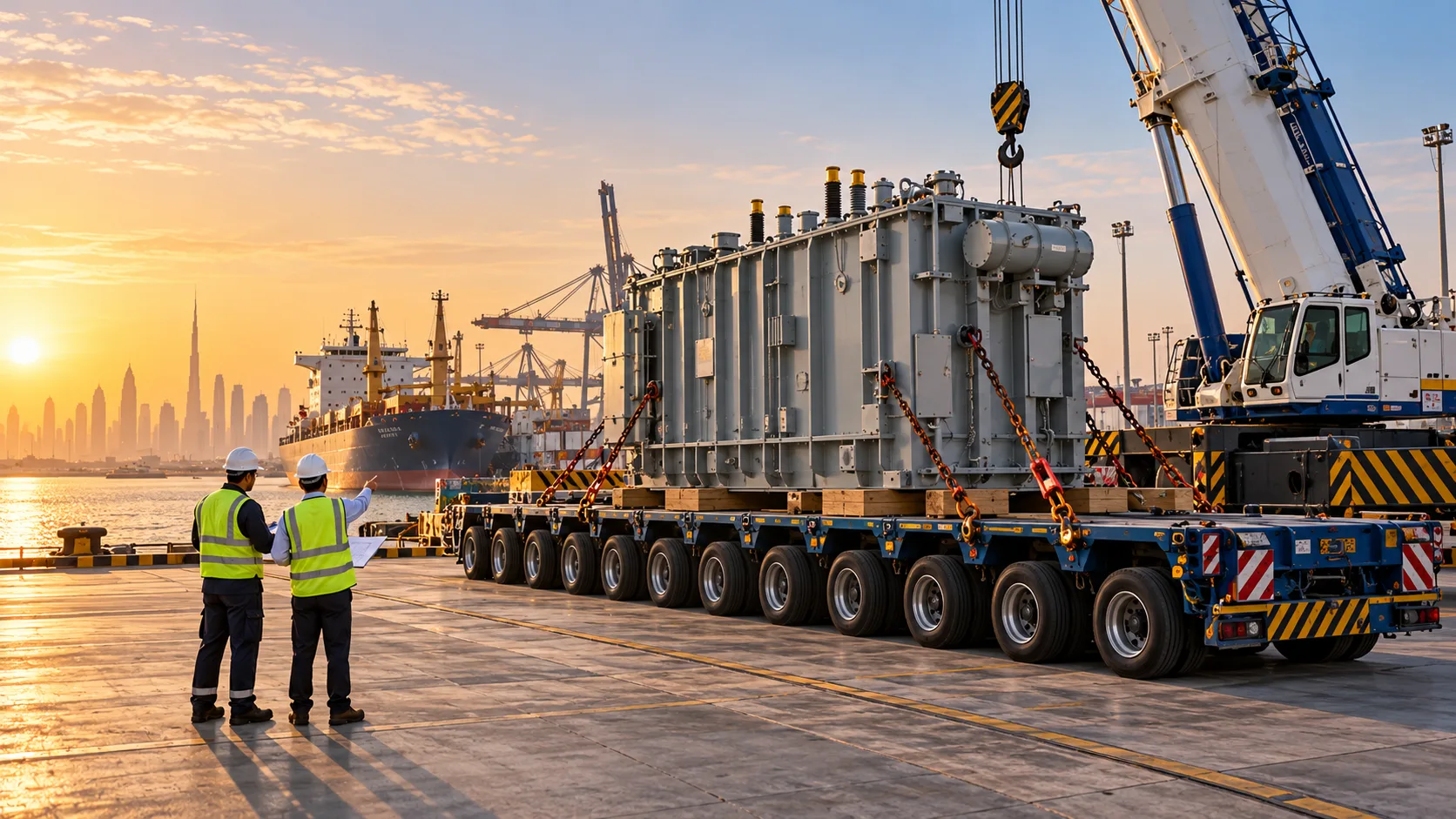
Project cargo needs a plan built around the actual load, not a standard container assumption. A transformer, production line, construction component or other oversized unit can affect the vehicle, lifting method, route, permits and vessel booking. NHK Logistics' project cargo service coordinates these connected steps for shipments moving through Dubai and the wider UAE.
Start with verified cargo data
Share a drawing or packing specification for every unit, showing the packed length, width, height, gross weight and lifting points. State whether any part can be removed for transport and identify the centre of gravity when it is known. Photographs help the operations team understand the base, access points and packaging, but they should support rather than replace confirmed measurements.
- Dimensions and gross weight for each packed piece
- Technical drawing, lifting points and centre-of-gravity information
- Pickup and delivery addresses with site access details
- Cargo-ready date and the required delivery window
- Handling restrictions, weather protection and storage requirements
- Named contacts who can approve the lifting and transport plan
If the final dimensions are still estimates, label them clearly. A change in height or weight can alter the selected trailer, route or crane. The same verified figures should appear in the transport request, packing list and booking instructions. Our freight quote checklist explains how to present shipment information consistently.
Survey the pickup, route and delivery site
Heavy or out-of-gauge cargo may need more than a suitable trailer. The route review can include gate widths, turning space, overhead restrictions, road conditions and the unloading position at destination. Confirm whether the pickup site can support the lifting equipment and whether the delivery site has enough room to receive and position the load.
For the UAE road leg, coordinate the route and equipment through the land transport service. Any permits, escorts or timing restrictions depend on the final load and route, so they should be checked for the actual movement before dispatch rather than assumed from a previous shipment.
Build one lifting and load-securement plan
Agree who supplies the crane, lifting accessories, trailer and load-securement materials. The plan should identify the responsible supervisor, exclusion area, communication method and approval point before the lift begins. Equipment capacity and lifting arrangements must be reviewed by competent parties for the specific cargo and site.
The export lift, inland movement and vessel loading should use compatible handling assumptions. When port-side coordination is required, a shipping agency can connect terminal communication and vessel requirements with the cargo plan. Our Dubai port-call coordination guide explains the information flow around a vessel call.
Choose the sea-freight arrangement
Some project cargo can move on a flat rack or open-top container; larger or heavier pieces may require breakbulk or another specialised arrangement. The suitable option depends on dimensions, weight, lifting points, route and carrier acceptance. Ask the sea freight team to compare the complete handling scope, not only the ocean rate.
If several suppliers contribute equipment to one project, define where the pieces will be received, checked and released. Temporary staging may involve warehousing and cross-stuffing, but the facility and handling method must be suitable for the stated weight and dimensions.
Prepare documents and responsibilities early
Use clear goods descriptions, values, package counts and weights in the commercial documents. Share any product-specific approvals or technical paperwork with the reviewing team before the cargo reaches the port. The customs clearance service can review the UAE declaration scope, while the consignee or appointed broker should confirm destination requirements.
Also record who is responsible for export packing, lifting, inland transport, terminal handling, ocean freight, insurance and destination delivery. If a trade term is being used, write it with the named place and compare it with our Incoterms guide.
Standard-size containers and conventional trucks that move alongside a project shipment are planned in our UAE container trucking and local delivery guide, and temporary-admission declarations for project equipment are described in the Jebel Ali import customs clearance guide.
Create a schedule with decision points
Work backwards from the required delivery date and include time for final measurements, route review, equipment booking, document checks and carrier acceptance. Add clear approval points before committing cranes, trailers or vessel space. A realistic plan also allows for changes in site readiness, weather and operational availability without promising a transit time before the full scope is confirmed.
To start a review, request a project cargo quote with the cargo drawings, dimensions, weights, pickup and delivery locations, readiness date and available site information. NHK Logistics can then coordinate the required transport and handling services as one movement plan.
Need help with a shipment?
Send us the route and cargo details. We reply within 2 business hours.
Request a Quote