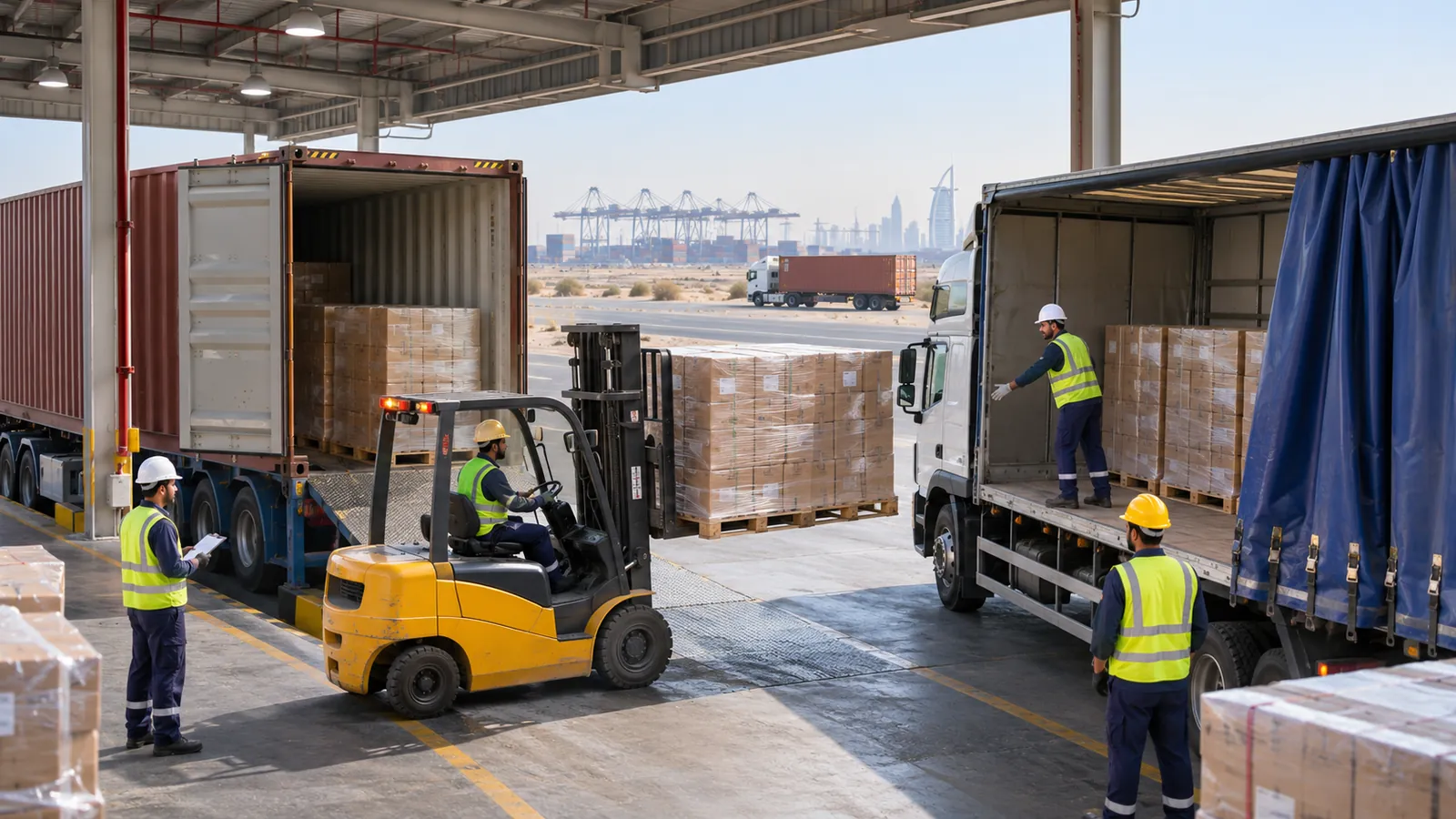
Cross-stuffing means taking cargo out of one container and loading it straight into another container or a truck, usually inside a bonded warehouse or a customs-approved yard. In the UAE it is one of the most common ways to move goods arriving at Jebel Ali on to Saudi Arabia, Oman, Qatar, Kuwait and Bahrain. Done well, it saves days and money. Done badly, it leads to damage, missing cartons and customs holds. This guide explains how cross-stuffing services in the UAE work and what to prepare.
What cross-stuffing is, and how it differs from storage
In normal warehousing, cargo is received, stored and released later. In cross-stuffing, the goods are transferred within hours or a day, with little or no storage time. Our warehousing and cross-stuffing planning guide covers the basics; this guide focuses on the transfer itself and on cargo heading to the GCC by road.
Common types of cross-stuffing
- Container to truck: an ocean container is unloaded into a flatbed or curtain-side trailer for road delivery to KSA or the GCC
- Container to container: cargo moves from one container into another, for example to return a carrier's box or change shipping line
- Splitting: one import container is divided across several trucks or destinations
- Combining: cargo from several containers or suppliers is loaded into one outbound unit
- Re-palletising or re-labelling during the transfer when the buyer needs it
When cross-stuffing makes sense
- The sea carrier does not allow its container to travel by road into Saudi Arabia, or charges high one-way fees
- The container's free time is running out and you want to return it quickly (see our demurrage and detention guide)
- One shipment has several buyers in different GCC countries
- Goods arrive in a 40ft container but the trucks or buyers need smaller loads
- Cargo is moving in transit and should not enter the UAE local market
Cross-stuffing for KSA logistics
Saudi Arabia is the main road destination from Dubai. A typical flow is: container discharged at Jebel Ali, moved under bond to the cross-stuffing yard, transferred to a Saudi-bound truck, then driven to the Ghuwaifat and Batha border. The documents for the truck must match what was loaded, carton for carton. Our UAE to Saudi Arabia shipping page explains the lane, the border crossing guide covers the border, and the FTL vs LTL guide helps choose the truck. If the goods are better sent by sea to Dammam or Jeddah, see the sea freight to Saudi Arabia guide.
Customs status: transit, re-export or local
Before any transfer, the customs status of the goods must be clear. Cargo that is only passing through the UAE usually moves under a transit declaration, so no UAE duty is paid. Cargo that was imported and is now leaving again is a re-export. The status decides which declaration is filed and where the transfer can happen. Our Transit In / Transit Out guide explains this, and the Jebel Ali customs clearance page covers the free zone side.
Documents needed for a cross-stuffing job
- Bill of lading or delivery order for the incoming container
- Commercial invoice and packing list with carton counts, weights and marks
- Transit or re-export declaration
- Truck or outbound container details
- Consignee and delivery address for each outbound load if the cargo is split
- MSDS and DG declaration if any goods are dangerous
Dangerous goods in cross-stuffing
Dangerous goods can be cross-stuffed, but only in facilities approved for them, with the correct labels moved to the new unit and with checks on what can be loaded together. Some classes cannot share a truck. Tell us early if the cargo includes chemicals, batteries, paints or aerosols. Our dangerous goods shipping guide explains DG classes and paperwork for shipping from Dubai.
Checks during the transfer
- Seal number checked and photographed before opening
- Cargo condition photographed as it comes out
- Cartons counted against the packing list
- Damaged or wet packages set aside and reported straight away
- Load secured with straps, dunnage or airbags in the new unit
- New seal number recorded on the documents
These records protect you if there is a claim later. Insurance is explained in our marine cargo insurance guide.
Common problems and how to avoid them
- Packing list does not match the real carton count
- Truck booked before the container is cleared, so it waits and charges extra
- Goods not labelled per buyer when one container is split
- Container returned late after the transfer
- DG cargo arriving without its MSDS
Cross-stuffing checklist
- Confirm the customs status: transit, re-export or local
- Send the packing list and bill of lading before the vessel arrives
- Book the outbound truck or container for the right day
- Tell us about any dangerous goods
- Decide how cargo is split and labelled per consignee
- Plan the empty container return within free time
Cross-stuffing often happens for goods held in the free zone; see JAFZA customs clearance and re-export.
Cross-stuffing with NHK Logistics LLC
NHK Logistics LLC handles the whole chain in Dubai: customs clearance, bonded transfer, cross-stuffing and land transport to Saudi Arabia and the GCC. Send your bill of lading and packing list through the quote form and we will plan the transfer, the trucks and the paperwork. Requirements change, so we confirm them for each shipment.
Need help with a shipment?
Send us the route and cargo details. We reply within 2 business hours.
Request a Quote