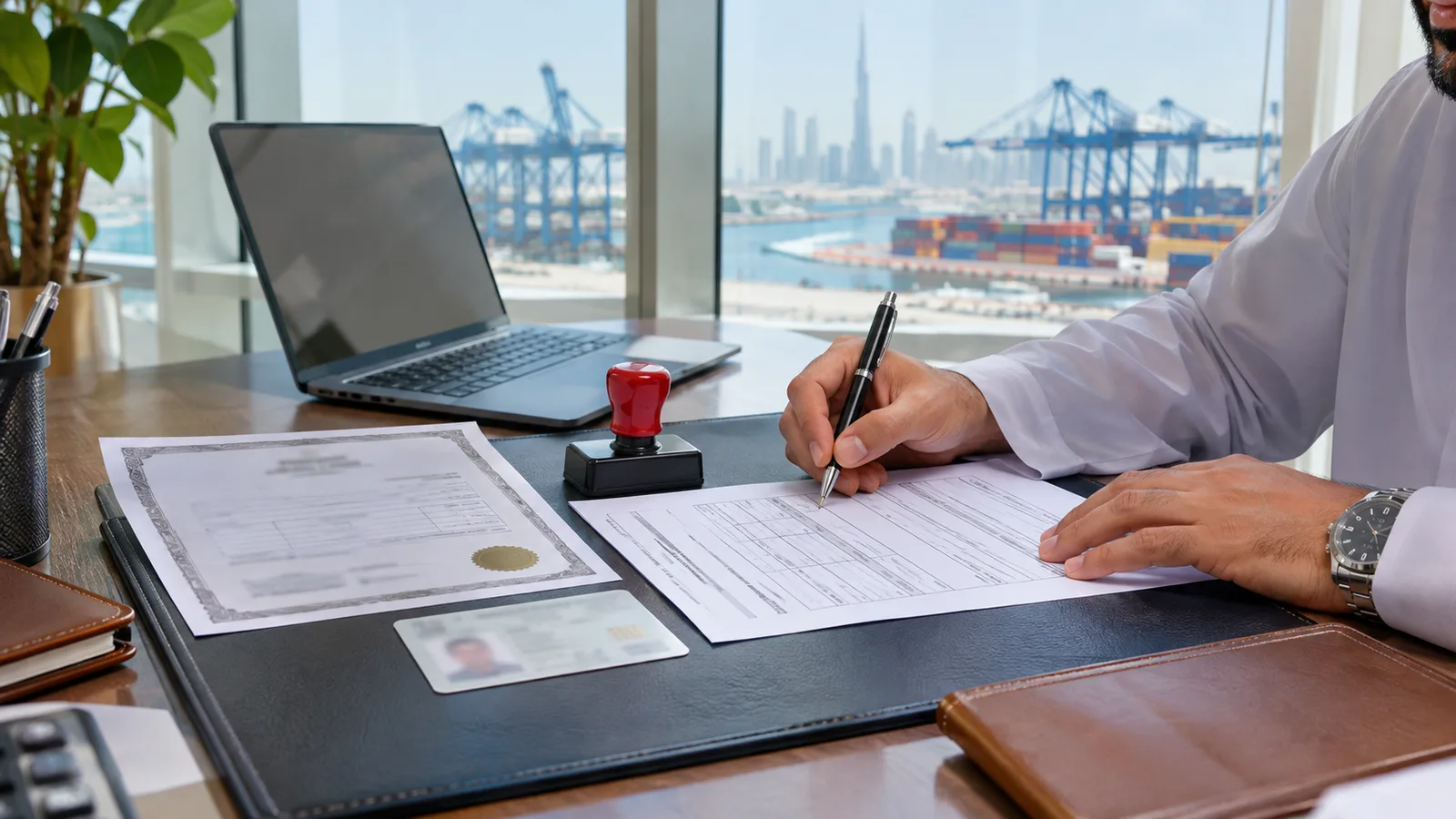
Before a customs broker in Dubai can clear your first shipment, it will ask you to fill in a KYC form (Know Your Customer). It feels like paperwork, but it is what allows the broker to file declarations in your company's name. This guide explains what the KYC form for customs clearance asks for, which documents to attach and how to avoid delays on your first import.
Why customs brokers ask for KYC
- The broker files declarations on your behalf, so it must confirm who you are
- Customs holds the importer or exporter responsible for the goods, duty and VAT
- Banks, shipping lines and authorities expect the broker to know its clients
- It links your shipments to the right customs client code and VAT registration
KYC is done once per client, then updated when your licence, signatories or address change. After that, each shipment only needs its own shipping documents.
What the KYC form usually asks
- Company name exactly as on the trade licence
- Trade licence number, issuing authority and expiry date
- Customs client code (importer/exporter code), if you already have one
- VAT registration number (TRN), if registered
- Office address, phone and email
- Owner, manager or authorised signatory details
- Type of goods you normally import or export
- Bank details for refunds or deposits, if needed
Forms differ from broker to broker, but the information is broadly the same. Give the exact legal name; a small spelling difference from the licence is a common reason for a declaration to be rejected.
Documents to attach
- Copy of the valid trade licence
- Emirates ID and passport copy of the owner or authorised signatory
- Customs client code registration or certificate
- VAT registration certificate, if registered
- Signed power of attorney or letter of authorisation for the broker
- Company stamp on the form, where used
Individuals importing personal goods, such as a car or household effects, usually give an Emirates ID or passport copy instead of a trade licence. Rules for vehicles are covered in our export certificate guide.
Customs client code: do you need one?
Companies that import or export commercially in Dubai generally need to be registered with Dubai Customs and hold a client code. Many first-time importers discover this only when the cargo has already arrived, which leads to storage charges. Ask your broker to check your registration before the goods ship. Free zone companies may also need the free zone's own approvals for moves in and out of the zone; see our Jebel Ali import clearance guide.
Power of attorney and letter of authorisation
The power of attorney (or authorisation letter) lets the broker act for you with customs. Check what it covers: import, export, transit, payment of duties and collection of documents. Keep a copy, and tell the broker in writing if a signatory leaves the company.
Common KYC mistakes that delay clearance
- Expired trade licence or Emirates ID copy
- Company name on the invoice not matching the licence
- No customs client code when the cargo arrives
- Unsigned or unstamped form
- Signatory on the authorisation not listed on the licence
- Activity on the licence that does not cover the goods being imported
The last point matters: if your licence activity does not cover the goods, customs may hold the shipment. Our UAE customs clearance step-by-step guide shows where these checks happen.
After KYC: customs clearance for imports
Once KYC is approved, an import clearance usually follows the same steps: documents are checked, the HS code is confirmed, the declaration is filed, duty and VAT are paid and the release is issued. See our customs clearance documents list and what a customs clearance company does.
JAFZA companies also need the right declaration type for each move; see JAFZA customs clearance and customs warehouses.
Complete KYC with NHK Logistics LLC
NHK Logistics LLC sends a short KYC form, checks your customs registration before your cargo sails and then handles clearance at Jebel Ali, the airports and land borders. See our customs clearance services and Jebel Ali customs clearance, or contact us to get the form. This guide is general information; Dubai Customs and free zone rules can change, so confirm current requirements before shipping.
Need help with a shipment?
Send us the route and cargo details. We reply within 2 business hours.
Request a Quote