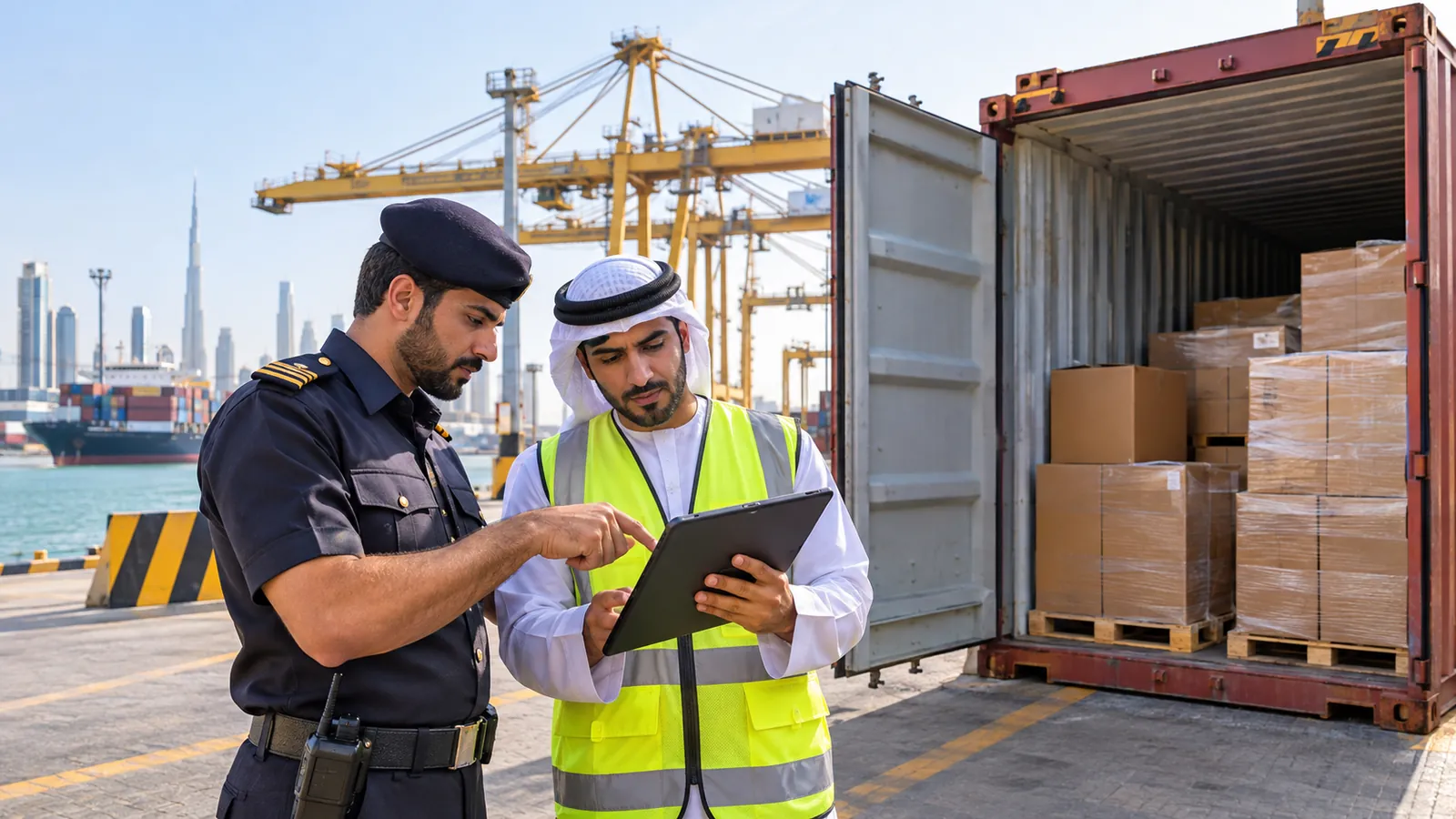
Every shipment that enters, leaves or passes through the UAE goes through customs. UAE customs clearance is mostly electronic and fast when the paperwork is right, but small errors can hold cargo for days. This guide gives a simple overview of the process for import, export and transit shipments.
Who can clear goods
Declarations are filed by a licensed customs broker or clearing agent on behalf of the importer or exporter, who needs an importer/exporter code with the relevant emirate's customs. In Dubai, declarations go through Dubai Customs' online system. NHK Logistics LLC acts as the clearing agent for its clients.
The three main types of clearance
- Import: goods entering the UAE local market; duty and VAT apply
- Export: goods leaving the UAE, including UAE-made or re-exported goods
- Transit: goods passing through the UAE to another country without entering the local market
Step 1: Prepare the documents
The core documents are the commercial invoice, packing list, bill of lading or air waybill, certificate of origin and any permits for controlled goods. The full list is in our customs clearance documents guide and our new shipping documents checklist.
Step 2: Classify the goods (HS code)
Each item needs the correct HS code. The code decides the duty rate and whether a permit is required. Wrong codes are one of the most common reasons for delays and penalties.
Step 3: File the declaration
The clearing agent submits the declaration with the invoice value, HS codes, origin and weights. For imports, duty is generally 5% of the CIF value for most goods under the GCC common tariff, plus 5% import VAT, with exemptions and different rates for some items. Our import customs guide explains this in detail.
Step 4: Pay duties and fees
Duty, VAT (or reverse charge for VAT-registered importers) and customs service fees are paid online. Port, terminal and delivery order charges are paid separately.
Step 5: Inspection, if selected
Customs may release the cargo directly or select it for document check or physical inspection. Restricted goods may also need approval from other authorities. Correct documents reduce the chance of long holds.
Step 6: Release and delivery
After release, the cargo can be collected from the port, airport or free zone and delivered by container trucking.
Export and transit clearance
Exports need an export declaration and often a certificate of origin; see our export customs guide. Transit cargo moves under a transit declaration, usually with a guarantee, and must exit within the allowed time; see the Transit In / Transit Out guide.
Free zone vs mainland
Goods brought into Jebel Ali Free Zone (JAFZA) for storage or re-export usually do not pay duty until they move into the mainland. The Jebel Ali customs clearance page explains the free zone flow.
Common reasons for delays
- Invoice values or descriptions that do not match the packing list
- Wrong or vague HS codes
- Missing permits for food, chemicals, medicines, electronics or other controlled goods
- Consignee name differences between documents
- Unpaid charges at the shipping line
Free zone companies follow a different path; see JAFZA customs clearance. Hazardous cargo has extra checks, covered in importing DG into Dubai.
UAE customs clearance with NHK Logistics LLC
NHK Logistics LLC clears import, export and transit cargo at Jebel Ali, Dubai airports and land borders. See our customs clearance services or send your documents through the quote form. Rules and rates change, so we confirm requirements for every shipment.
Need help with a shipment?
Send us the route and cargo details. We reply within 2 business hours.
Request a Quote