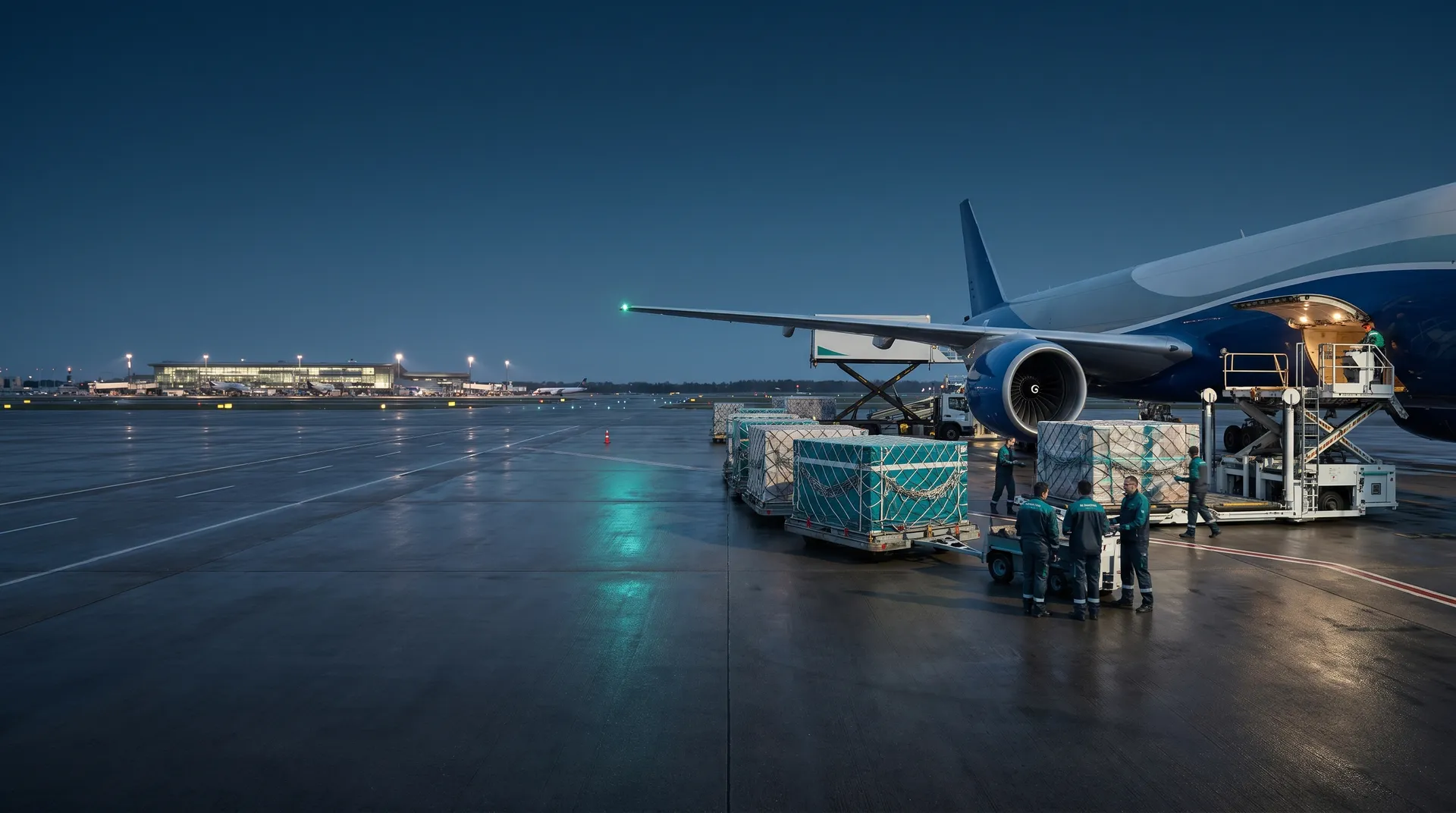
Air freight is booked for speed, and the most common way to lose that speed is at the airport acceptance desk. Cargo that is badly packed, wrongly labelled or bigger than the booking said can be refused or held, and the flight leaves without it. This guide covers how to pack and mark air cargo from Dubai so it goes through acceptance and screening the first time.
Pack for handling, not just for the journey
Air cargo is moved many times: from your warehouse to the truck, into the airport terminal, onto an aircraft pallet or container, and back again at destination. Packing has to survive forklifts, stacking and vibration. Use strong cartons sized to the goods, fill empty space, and keep heavy items low. Fragile goods need inner protection, not just a fragile sticker.
- Strong export cartons, not reused or damaged boxes
- Void fill so goods cannot move inside the carton
- Heavy items at the bottom of every pallet
- Cartons inside the pallet footprint, with no overhang
- Pallets stretch-wrapped and, where needed, strapped
- Wooden pallets and crates treated to the standard required by the destination
Dimensions decide the price
Airlines charge on the higher of actual weight and volume weight. A light but bulky shipment can cost far more than its weight suggests. Measure every piece after packing, not before, and send the real length, width and height with the booking. Our chargeable weight guide explains the calculation. Tidy, square pallets usually cost less than loose cartons of odd sizes.
Size also matters for which aircraft can carry the cargo. Some pieces fit only on freighters, and very long or tall items need checking before booking. Share the dimensions early so our air freight team can confirm the cargo fits the planned flight.
Marks and labels on every piece
- Air waybill number and piece count, for example 1 of 6
- Shipper and consignee name and address
- Destination airport
- Gross weight of the piece
- Orientation arrows for goods that must stay upright
- Handling labels such as fragile or keep dry, only where they apply
- Old labels and barcodes removed from reused packaging
Labels should be on the side of each piece, not only on top, so handlers can read them when pallets are stacked. Piece counts on the labels must match the air waybill and the packing list exactly.
Special cargo needs extra steps
Some goods need more than standard packing. Dangerous goods, including many lithium batteries, need correct classification, packaging and declarations; see our dangerous goods guide. Perishable and temperature-sensitive goods need insulated packing and planned handover times; see our perishable air freight guide. Declare these early, as airlines may need to approve them before booking.
Security screening and acceptance
Air cargo is security screened before it is loaded. Packing that is easy to screen moves faster. Very dense or tightly mixed loads may need to be broken down for checks, which takes time. Deliver the cargo with the documents that match it: the commercial invoice, packing list and any export declaration through our customs clearance service. Arriving close to the cutoff leaves no time to fix a problem.
Let a warehouse prepare it
If goods come from several suppliers, or the supplier cannot pack to air cargo standard, our warehousing team can receive, check, repack, palletise, measure and label the cargo before it goes to the airport. Our land transport team then delivers it to the terminal on time. This also gives you true dimensions before the booking is final.
Pre-handover checklist
- Goods packed in strong cartons with void fill
- Pallets wrapped, inside the footprint, heavy items low
- Final dimensions and weights measured after packing
- Every piece labelled with air waybill number and piece count
- Special cargo declared and approved before booking
- Invoice, packing list and export declaration matching the cargo
- Delivery to the airport planned well before the cutoff
Good packing also matters for insurance claims; see the marine cargo insurance guide.
Lithium batteries and other hazardous items have their own rules on arrival too; see importing hazardous goods into Dubai.
Ship air cargo from Dubai with NHK Logistics
Send the goods description, the number of pieces, packed dimensions and weights, the destination and the ready date through the quote form or the air freight page. NHK Logistics will check the packing, confirm the flight, handle the export documents and deliver the cargo to the airport. For help choosing between air and sea, read air freight vs sea freight.
Need help with a shipment?
Send us the route and cargo details. We reply within 2 business hours.
Request a Quote