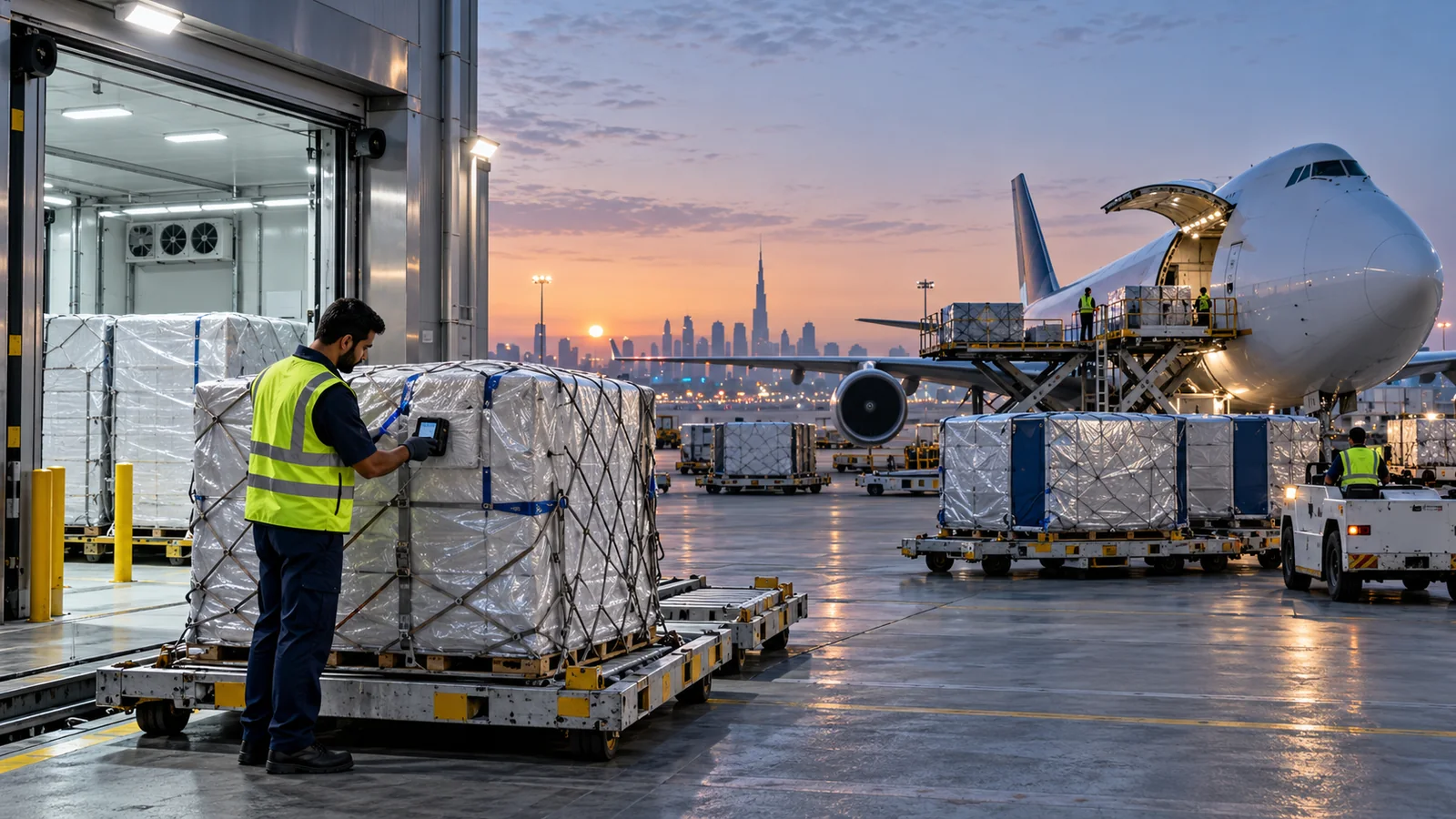
Fresh food, flowers, pharmaceuticals, samples and some chemicals lose value fast when the temperature drifts or a handover is missed. Air is usually the right mode for them, but speed alone does not protect the cargo: the temperature range, the packing, the paperwork and the timing at each airport do. This guide explains how NHK Logistics plans temperature-sensitive shipments under our air freight service. For how airlines price the shipment, read our chargeable weight and air waybill guide first.
Start with the temperature range, not the flight
Every cold chain plan begins with one written instruction from the shipper: the range the goods must stay in and for how long. Common bands are frozen, chilled, a controlled room-temperature band and 'protect from heat' cargo, but your product's own specification decides. Write the range in degrees, the maximum time the goods can tolerate outside it, and whether freezing is as harmful as heat; for many medicines and fresh produce it is.
- Exact temperature range in degrees and the tolerance outside it
- Total door-to-door time the packing must cover, with a margin for delay
- Whether the goods are perishable food, plants, medicines or chemicals
- Any regulatory status, such as controlled medicines or goods needing a health certificate
- Who receives temperature alarms and who decides if a delayed shipment continues
Passive or active packing
Passive packing uses insulated boxes, gel or ice packs, or dry ice to hold the range for a set number of hours without power. It suits smaller shipments and shorter routes. Active containers have their own powered heating and cooling and suit larger, higher-value or longer shipments, but they must be booked with the airline in advance and add weight. Whichever you choose, size the packing for the whole journey, not just the flight time: trucking, terminal acceptance, build-up, transfers and clearance all count.
Dry ice is regulated as dangerous goods in air transport, so the quantity must be declared and the package marked; our dangerous goods shipping guide explains how DG declarations work. Insulation also adds volume, which can push the shipment onto volumetric weight, so share box dimensions when you ask for a quote.
Data loggers and monitoring
A temperature data logger inside the shipment is the only proof of what the goods went through. Place it with the product, not against a cold pack, start it before packing and agree who downloads it on arrival. For higher-value cargo, a logger that reports in real time lets the team react while there is still time, for example by moving cargo into a cool room during a transfer delay.
Booking, cut-off and airport timing
Perishable cargo should reach the airport as close to the airline's acceptance cut-off as is safe, and not hours early on an open dock. Book the flight first, then plan collection backwards from the cut-off. In the UAE heat, the trucking leg to the airport matters as much as the flight: use a refrigerated or at least covered vehicle, load last and drive direct. If the goods must be prepared or held before departure, a short stay in a temperature-controlled area of a warehouse is safer than waiting on the vehicle.
- Confirm airline acceptance of the commodity, packing type and any active container
- Ask for cool-room storage at origin and destination terminals where available
- Mark packages with orientation and temperature handling labels
- Choose direct flights where possible to avoid transfers in the heat
- Send a pre-alert with flight, AWB and logger details to the receiver
Documents and permits
Delays at destination usually come from paperwork, not the aircraft. Food and plants often need a health or phytosanitary certificate, and medicines may need an import permit in the destination country before they ship. Check the requirement with the receiver before booking and send scanned copies with the pre-alert. The core documents still apply: a commercial invoice, packing list and the air waybill, with correct HS codes and descriptions; our customs clearance documents guide lists them. For goods arriving into the UAE, our customs clearance team can prepare the declaration before the flight lands.
Handover at destination
The weakest point of a cold chain is the hour after landing. Agree in advance who collects the cargo, how fast clearance can happen and where the goods go if clearance is delayed. A broker with the documents ready, a refrigerated vehicle booked for the arrival window and a receiver who downloads the logger on delivery close the loop. Under a door-to-door freight forwarding plan, NHK Logistics coordinates those steps as one shipment; see our door-to-door shipment guide.
When sea freight can still work
Not every temperature-sensitive cargo needs air. Large, steady volumes of chilled or frozen goods often move in reefer containers by sea, which is cheaper per unit when the product's shelf life allows the longer transit. Our air vs sea freight comparison and sea freight container types guide help you decide.
Temperature-sensitive air freight checklist
- Written temperature range, tolerance and total transit time
- Packing type (passive or active) sized for the full journey
- Dry ice declared as dangerous goods where used
- Data logger started and placed with the product
- Flight booked before collection; collection planned to the cut-off
- Health, phytosanitary or import permits checked with the receiver
- Pre-alert with AWB, flight and logger details sent before departure
- Destination clearance and refrigerated delivery booked for arrival
Ship temperature-sensitive cargo with NHK Logistics
Send the product, temperature range, box count, dimensions, weight and destination through the air freight page or the contact form. NHK Logistics will match the packing and flight to the range, coordinate the airport handover and keep you updated at each milestone. Our freight quote checklist shows what to include for a fast, accurate quote.
Need help with a shipment?
Send us the route and cargo details. We reply within 2 business hours.
Request a Quote