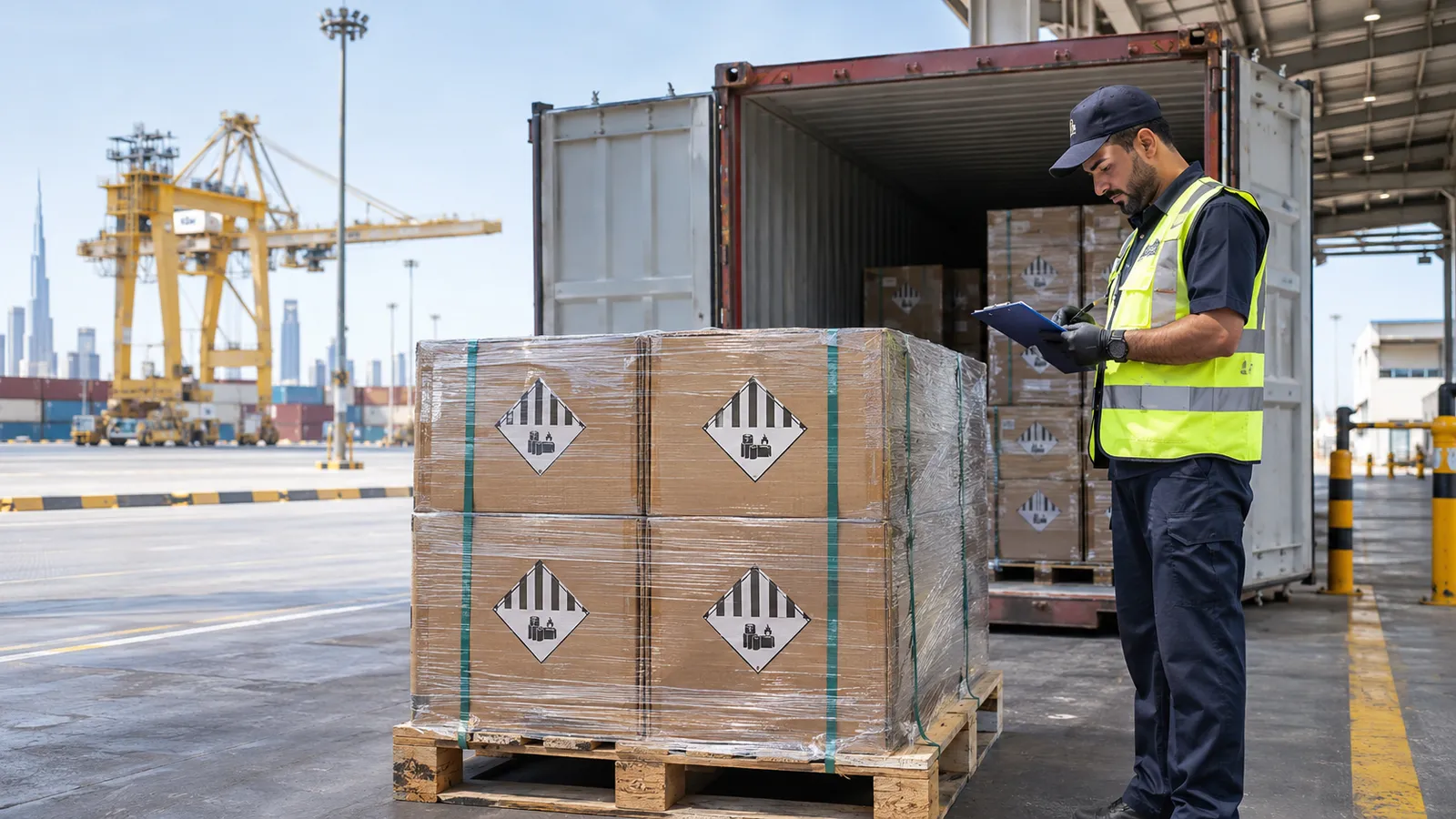
Many importers in the UAE bring in goods that count as dangerous goods (DG) without thinking of them that way: lithium batteries, power banks, paints, aerosols, chemicals, perfumes and cleaning products. These shipments can be imported into Dubai, but they need correct classification, documents and sometimes extra approvals before they arrive. This guide covers the import side; for exports see our dangerous goods shipping from Dubai guide.
Is your cargo dangerous goods?
- Lithium-ion and lithium-metal batteries, alone or packed with or inside equipment (Class 9)
- Flammable liquids such as paints, solvents, perfumes and some adhesives (Class 3)
- Aerosols and gas cylinders (Class 2)
- Corrosives such as acids and some cleaning chemicals (Class 8)
- Oxidisers, toxic substances and some lab chemicals
The supplier's Safety Data Sheet (SDS, also called MSDS) section 14 shows the UN number, proper shipping name, class and packing group. If section 14 says 'not regulated', ask the supplier to confirm it in writing.
Documents the supplier must provide
- Current SDS in English
- Dangerous goods declaration (IMDG for sea, IATA DGR for air)
- Lithium battery test summary (UN 38.3) for battery shipments
- Commercial invoice and packing list showing the DG items clearly
- Container packing certificate for sea containers
Missing or wrong DG documents are the most common reason a line refuses a booking or a port holds a box. See our full shipping documents checklist.
Permits and approvals
Depending on the product, some imports need approval from the relevant UAE authority before release, for example certain chemicals, pesticides or controlled substances. Ordinary consumer batteries usually do not need a special import permit, but they still have to travel as DG where the rules require it. Your customs broker should check the HS code and any restriction before the goods ship, not after arrival.
Arriving at Jebel Ali or the airport
- The shipping line or airline must accept the DG booking at origin
- Some DG classes have limits on storage time at the port, so plan quick collection
- Delivery trucks may need DG-approved drivers and vehicles
- Receiving warehouses must be allowed to store the class you are importing
Slow collection of DG cargo can mean extra storage charges; our demurrage and detention guide explains free time.
Customs clearance for DG imports
Clearance follows the normal steps: HS code, declaration, duty and VAT, release. The difference is the extra checks on documents and any permits. Read our Jebel Ali import clearance guide and the customs clearance documents list.
If DG cargo is going into the free zone or a bonded store first, see JAFZA customs clearance and customs warehouses; not every warehouse may store every DG class.
Import DG cargo with NHK Logistics LLC
NHK Logistics LLC books DG cargo by sea freight and air freight, checks the SDS and declaration before departure and handles customs clearance at Jebel Ali. Send us the SDS and invoice and we will confirm what is needed. Contact us. This is general guidance; DG rules and UAE requirements change, so always confirm the current position for your product.
Need help with a shipment?
Send us the route and cargo details. We reply within 2 business hours.
Request a Quote