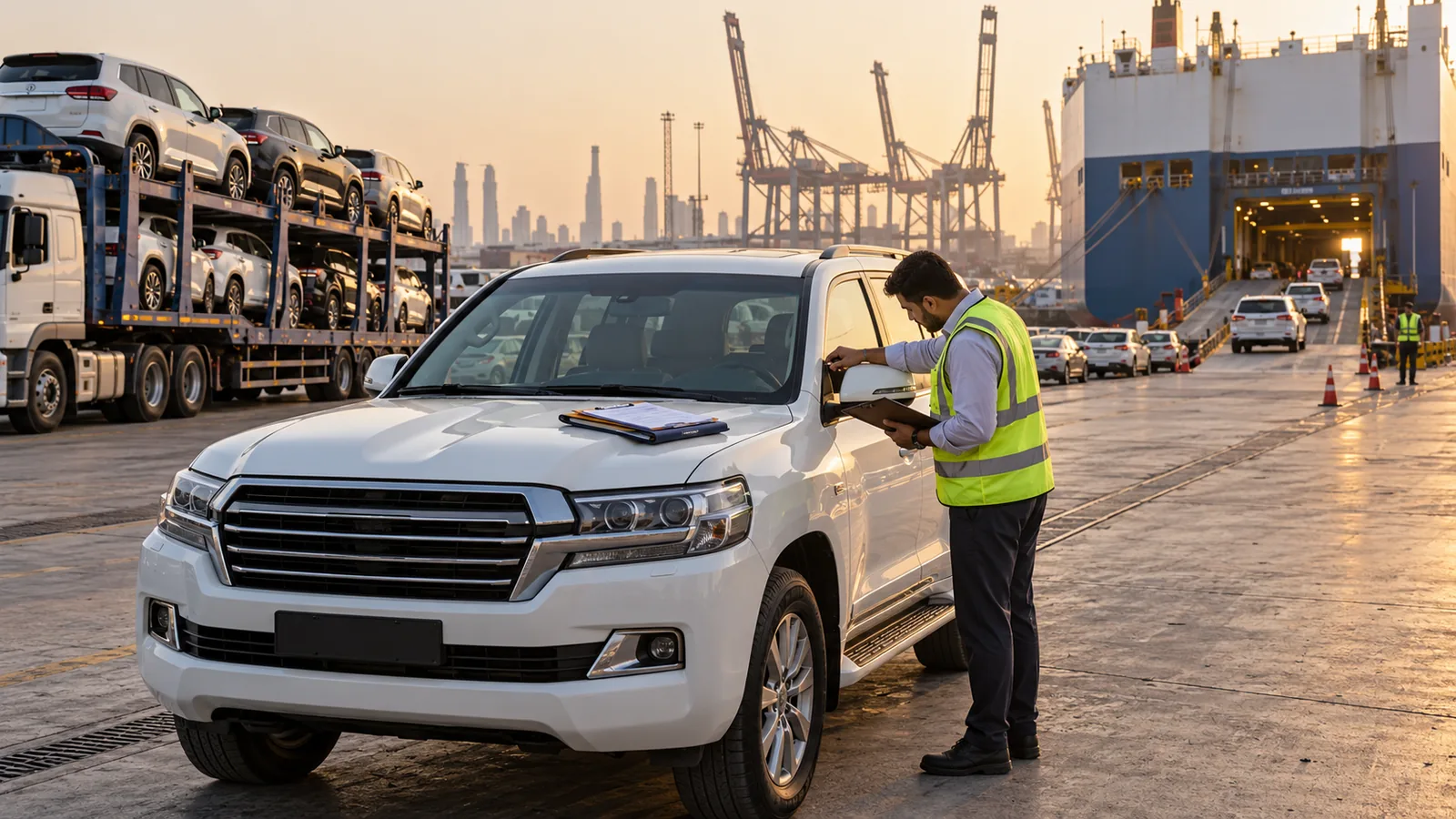
Exporting a car from Dubai is mostly a paperwork job. The shipping itself, by RoRo or in a container, is simple once the vehicle is legally ready to leave the UAE. Most delays come from unpaid fines, a bank loan still on the car, a missing export certificate or a document that the destination country asks for and nobody prepared. This guide explains the steps NHK Logistics follows with its car shipping from Dubai and car transportation services.
Step 1: Check the car can be exported
Before anything is booked, confirm three things. First, the destination country accepts the car: many countries limit vehicle age, steering side, engine size or emission standard, and some ban used imports completely. Second, the car is free of any finance: if a bank loan is registered, you need a clearance letter from the bank before the registration can be cancelled. Third, all traffic fines and Salik or toll balances are paid, because the registration authority will not issue export papers while fines are outstanding.
- Destination age, steering and emission rules checked with the consignee or their broker
- Bank clearance letter if the car was financed
- Traffic fines and toll balances cleared
- Original registration card (mulkiya) and owner's Emirates ID or passport
- Chassis (VIN) number checked against the documents
Step 2: Export certificate and export plates
For a UAE-registered car, the registration is cancelled for export at the emirate's traffic authority, which issues an export certificate. Depending on the emirate and the process, the car may also receive temporary export plates so it can be driven or carried to the port. The export certificate is the key document: shipping lines and UAE customs will not accept the car without it. Requirements and fees are set by the authority and can change, so we confirm them at the time of export. New cars bought from a dealer for export usually come with a dealer export certificate instead of a registration.
Step 3: Shipping and customs documents
Once the car is cleared for export, the shipment needs a short set of documents for the UAE export declaration and for destination customs. Our customs clearance team files the export declaration, and the Dubai customs documents guide explains the general paperwork.
- Export certificate (or dealer export certificate for new cars)
- Commercial invoice or bill of sale showing the value
- Copy of the owner's passport or Emirates ID, or company trade licence
- Consignee name, address and ID details for the destination
- Export declaration filed with UAE customs
- Bill of lading issued by the shipping line or forwarder
- Certificate of origin or pre-shipment inspection where the destination requires it
Some countries need a roadworthiness or pre-shipment inspection certificate issued in the UAE before the car sails. Ask your consignee early, because the inspection must be booked before loading. For Pakistan-bound vehicles, also check the current gift, baggage or transfer-of-residence scheme rules on the receiving side; our Dubai to Pakistan shipping page covers that lane.
Step 4: Collection and delivery to Jebel Ali
Cars can be driven to the port only with valid plates and insurance, so most exporters use a car carrier. Our car transportation team collects vehicles from homes, showrooms and auctions across Dubai, Sharjah, Abu Dhabi and the other emirates and delivers them to the RoRo terminal or to the warehouse where they are loaded into a container. Photos of the car and its mileage are taken at pickup so its condition is recorded.
Step 5: Prepare the car for loading
- Fuel at about a quarter tank or less
- Battery connected and charged for RoRo; disconnected where the line requires it for containers
- No personal items inside for RoRo; container loads follow the line's rules
- Spare key handed over with the documents
- Alarm switched off, aftermarket accessories removed or declared
- Leaks fixed, because leaking vehicles can be refused
Whether the car rolls onto a vehicle carrier or is lashed inside a container depends on its value, condition and destination. Our RoRo vs container guide compares both, and the sea freight from Dubai guide explains container cutoffs and free time. For several cars, or a car with spare parts, a shared 40-foot container is often the efficient choice, loaded at a Jebel Ali warehouse.
Shipping terms and who pays what
Agree with the buyer which costs you cover: only up to loading in Dubai, or freight to the destination port as well. Destination port charges, duties and taxes are normally paid by the consignee. Our Incoterms guide explains FOB and CIF in plain terms, and freight forwarding can link the destination clearance and delivery if you need door-to-door.
Car export checklist
- Destination import rules confirmed for the car
- Loan cleared and bank letter received
- Fines and toll balances paid
- Export certificate and export plates issued
- Invoice, owner ID and consignee details ready
- Inspection certificate booked if the destination requires it
- Car collected and condition photos taken
- Car prepared for RoRo or container loading
- Bill of lading details checked before release
Export your car with NHK Logistics
Send us the car details: make, model, year, VIN, current location, whether it is registered or new, and the destination. The team will check the paperwork, arrange the export certificate and customs declaration, collect the car anywhere in the UAE and book RoRo or container shipping. You can also read about our full car shipping service.
If the car continues by road or rail after the sea or air leg, our car transportation guide for CIS and Central Asia explains the route planning, transit documents and handover records for those destinations.
Need help with a shipment?
Send us the route and cargo details. We reply within 2 business hours.
Request a Quote