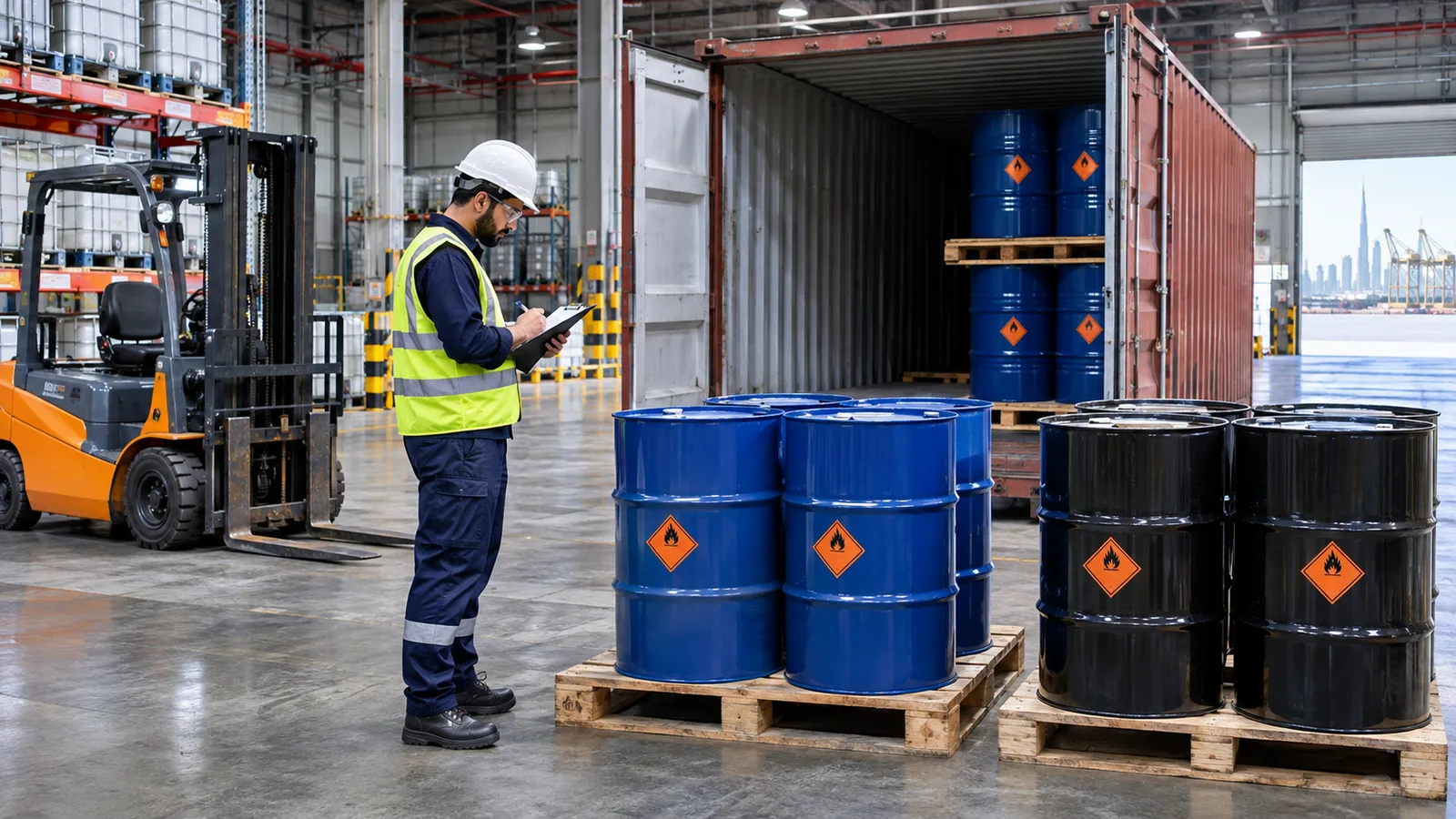
If your company ships chemicals, paints, batteries, aerosols, gases or other hazardous products by sea from Dubai, the IMDG Code applies to you. Searching for IMDG training in Dubai is usually the first step. This guide explains who needs the training, what it covers and how it fits into shipping dangerous goods from Jebel Ali.
What is the IMDG Code?
The International Maritime Dangerous Goods (IMDG) Code is the IMO rulebook for carrying dangerous goods by sea. It sets how goods are classified, packed, marked, labelled, documented and stowed. Shipping lines calling at Jebel Ali will not accept dangerous goods that do not follow it. For air cargo, a different set of rules (IATA DGR) applies; see our dangerous goods shipping guide.
Who needs IMDG training
- Staff who classify dangerous goods or pick the UN number
- People who pack drums, cartons or IBCs for sea transport
- Anyone who marks and labels packages
- Staff who load and secure DG cargo in containers
- People who sign the dangerous goods declaration
- Forwarder and warehouse staff who handle DG bookings
The IMDG Code requires shore-side staff to be trained for the tasks they do, and employers to keep training records. The training should be refreshed regularly and whenever the rules change.
What IMDG training covers
- The nine dangerous goods classes and how to classify a product
- Reading the Dangerous Goods List and UN numbers
- Packing groups, approved UN packaging and limited quantities
- Marks, labels and container placards
- Segregation of incompatible goods
- The dangerous goods declaration and container packing certificate
- Emergency response and safety awareness
Courses in Dubai range from short awareness sessions to full function-specific courses. Pick one that matches the job: a warehouse packer and the person signing the declaration need different depth.
Documents for a DG sea shipment
- Safety Data Sheet (SDS/MSDS) for each product
- Dangerous goods declaration signed by a trained person
- Container packing certificate
- Commercial invoice and packing list
- Any permits needed for controlled chemicals
The shipping line reviews these before accepting the booking, so send them early. Our shipping documents checklist covers the standard papers.
Booking DG containers from Jebel Ali
- Request DG approval from the line before the cut-off, often a few days ahead
- Some classes are restricted on certain vessels or routes
- DG surcharges apply on top of normal ocean freight
- Placards must be on the container before gate-in
- Mixed loads need segregation checks
Plan extra time compared with general cargo. Our sea freight guide explains normal cut-offs and free time, and our FCL shipping guide covers booking a full container.
Common mistakes
- Using an old or incomplete SDS
- Packaging that is not UN-approved for the product
- Missing or wrong labels
- Declaration signed by untrained staff
- Not declaring lithium batteries inside equipment
Importers receiving DG cargo should read importing lithium batteries and hazardous goods into Dubai for the documents, permits and port steps on arrival.
Ship dangerous goods with NHK Logistics LLC
NHK Logistics LLC checks DG documents, requests line approval and books containers from Jebel Ali. We do not run IMDG courses, but we help trained shippers get bookings accepted the first time. See our sea freight services and freight forwarding, or send your SDS for a quote. This guide is general information, not a substitute for IMDG training or the current edition of the Code.
Need help with a shipment?
Send us the route and cargo details. We reply within 2 business hours.
Request a Quote