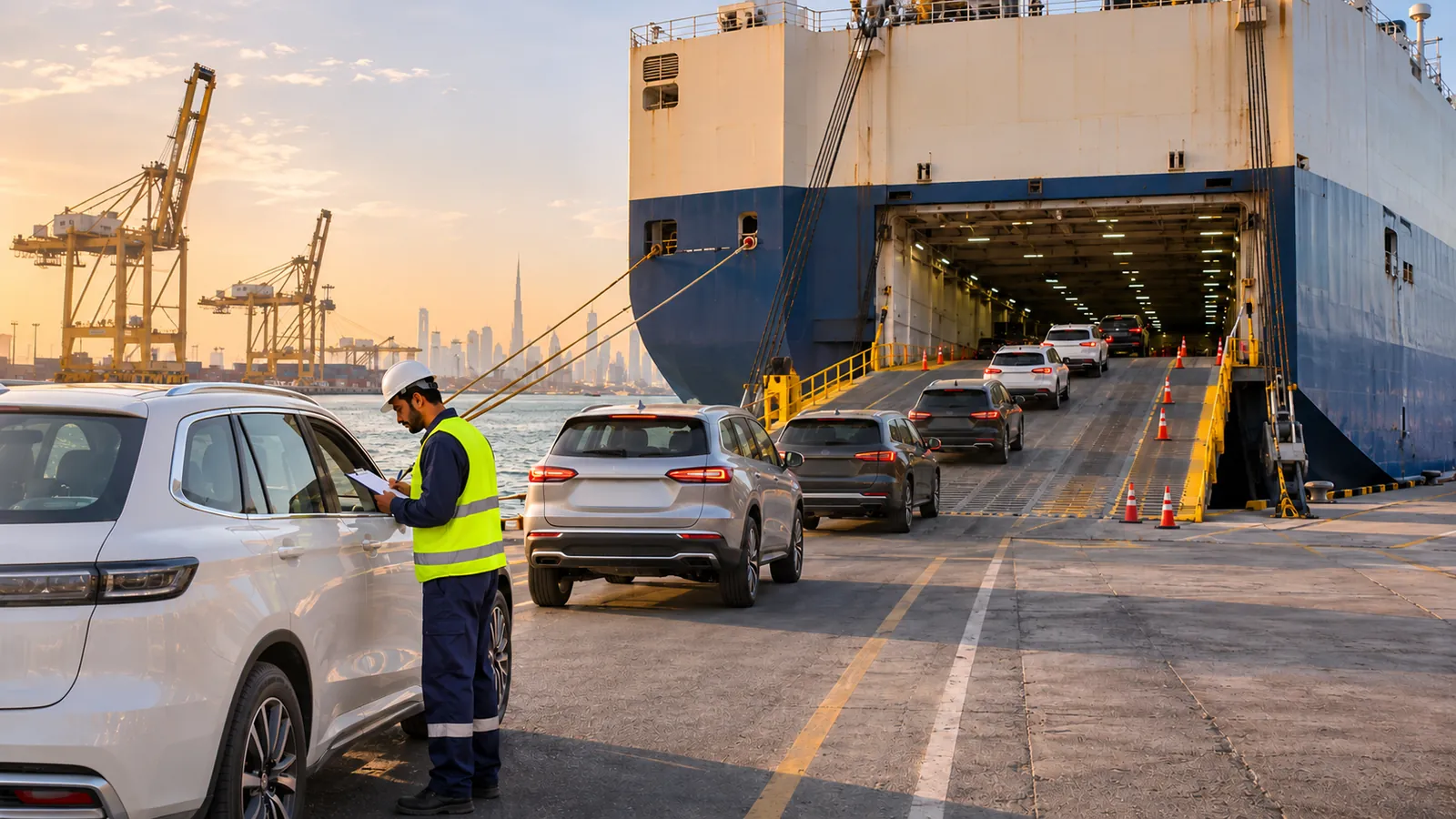
RoRo, short for roll-on roll-off, is the simplest way to ship a running vehicle by sea. The car is driven onto a specialised vessel at the load port, parked and lashed on a car deck, and driven off again at the destination. There is no container to load or unload. That simplicity is why RoRo is popular for cars, SUVs, pickups and some machinery leaving Dubai. But RoRo terminals are strict about how vehicles arrive, and most delays come from cars that were not prepared properly. This guide walks through the full process.
Is RoRo the right choice for your car?
RoRo suits running, roadworthy vehicles going to ports with a regular car-carrier service. A container is often better for high-value or classic cars, non-running vehicles, or when you want to ship personal goods with the car. Our RoRo vs container comparison explains the trade-offs, and the guide to shipping a car in a container covers the other route in detail.
- The vehicle must start, drive, steer and brake on its own
- The destination port needs a RoRo service from the UAE
- Personal items inside the car are generally not accepted on RoRo
- Oversized vehicles (trucks, buses, machinery) are measured and priced by size
How a RoRo booking works
RoRo vessels sail on fixed schedules, and each sailing has a cargo cutoff for vehicle delivery to the terminal. NHK Logistics books the space with the carrier, confirms the delivery window and issues the instructions you need to hand the car over. Share the make, model, year, VIN (chassis number), dimensions for larger vehicles, the destination port and the consignee details. You can start through our car shipping from Dubai page or the quote form.
Export documents before the car moves
A vehicle cannot leave the UAE as an ordinary car on the road. It needs export paperwork, usually an export certificate in place of the normal registration, plus ownership documents and the owner's ID. Any bank finance must be cleared first. Our car export documents guide lists what is needed and how the inspection step works. Our customs clearance team files the export declaration so the car is cleared to load.
Preparing the vehicle for RoRo
- Fuel: keep only a small amount, enough to drive on and off the ship
- Battery: charged and firmly connected; a weak battery can stop loading
- Keys: hand over a working key; the terminal and crew will drive the car
- Personal items: remove loose belongings, child seats and loose accessories
- Alarm: switch off or explain how to disable it
- Leaks: fix any oil, fuel or coolant leak; terminals can reject leaking vehicles
- Clean: wash the car so damage marks are easy to see at inspection
Delivering the car to the port
The car is delivered to the RoRo terminal at the port within the window the carrier gives. You can drive it there yourself, or we can collect it with a car carrier truck; our cars transportation service moves single and multiple vehicles across the UAE. At the gate the car is checked against the booking and the export documents, and a condition report is made.
Photos and condition reports
Before handover, take clear photos and a short video of every side of the car, the interior, the odometer and any existing marks. The terminal's condition report records the vehicle's state when it is received. If something goes wrong in transit, these records are what any claim will rest on. Ask us about marine cargo cover early; it has to be arranged before the vessel sails.
Bill of lading and release at destination
Once the vessel sails, the carrier issues a bill of lading naming the shipper and consignee and showing the VIN. How the car is released at the destination depends on the type of bill: an original bill must be presented, while a telex release or sea waybill can let the consignee collect without originals. Our bill of lading release guide explains each option. At the destination, the consignee clears import customs under local rules, which can include age limits, duties and roadworthiness checks.
Common reasons RoRo cars get delayed or rejected
- Export paperwork not ready by the delivery cutoff
- Finance on the vehicle not cleared
- Flat battery or a car that will not start at the terminal
- Personal items left inside
- Fluid leaks spotted at inspection
- VIN on the documents not matching the car
- Destination import rules not checked before shipping
RoRo car shipping checklist
- Confirm the destination port has a RoRo service
- Clear any finance and get export documents
- Book the sailing and note the delivery window
- Charge the battery, reduce fuel and fix leaks
- Remove personal items and switch off the alarm
- Photograph the car before handover
- Agree the type of bill of lading with your consignee
- Check import rules at the destination
For how cover and claims work, read the marine cargo insurance guide.
Ship your car by RoRo with NHK Logistics
Send the vehicle details, the destination and your preferred timing through the quote form. NHK Logistics will book the RoRo sailing, handle the export clearance at Jebel Ali, arrange collection if needed and keep you updated until the car is loaded. If the car is staying at the port longer than expected, our guide to container demurrage and detention explains how port storage time works. For mixed shipments we coordinate everything as one freight forwarding job. Sailings, carriers and rules vary, so we confirm the details for each shipment.
Need help with a shipment?
Send us the route and cargo details. We reply within 2 business hours.
Request a Quote