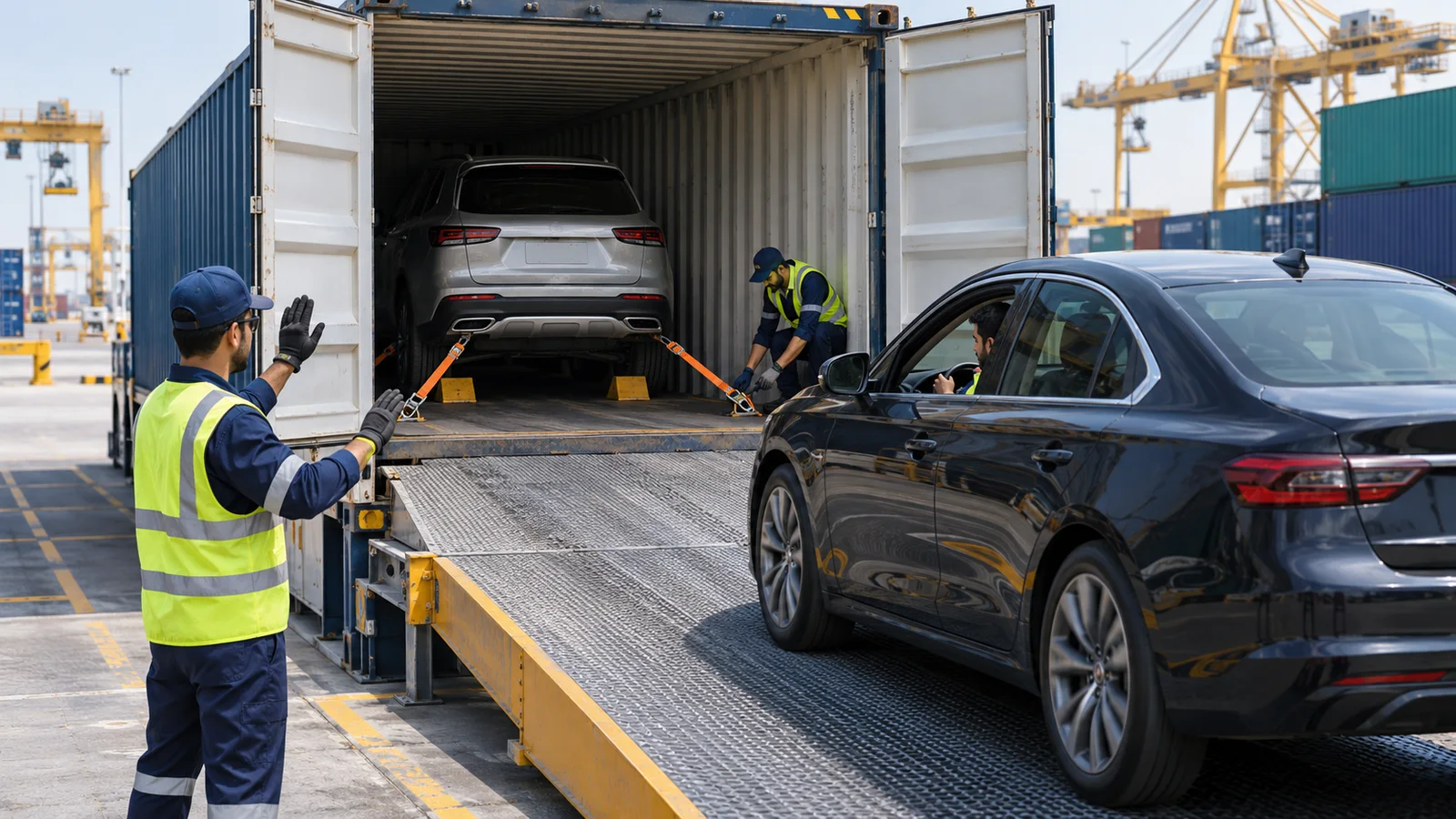
A container is the safest way to send a car by sea. The vehicle travels sealed inside a steel box, protected from weather and handling, and it does not need to be driven onto the ship. This guide explains how NHK Logistics plans container car shipments under our car shipping from Dubai service: which container to choose, how the car is prepared, loaded and secured, and what paperwork is needed. If you are still deciding between the two methods, read our RoRo vs container guide first.
When a container is the right choice
- High-value, new, classic or collector cars
- Non-running or accident-damaged vehicles that cannot be driven onto a RoRo ship
- Destinations without a regular RoRo service
- Owners who want to send spare parts or approved items with the car
- Several cars from one shipper that can share a 40ft container
20ft, 40ft or a shared 40ft
A single car usually fits in a 20ft container, which gives it its own box. A 40ft container can carry two or more cars depending on their size, and dealers often load several vehicles on racks or in a tight sequence to bring the cost per car down. In a shared container, each car still needs its own documents and its own entry on the bill of lading or cargo list, so every owner or buyer can clear their vehicle. Our FCL booking guide explains how container bookings, cut-offs and free time work, and the sea freight container types guide compares box sizes.
Preparing the car
- Clean the car inside and out so damage can be seen and some destinations accept it without extra cleaning
- Leave a low fuel level, as carriers limit fuel in shipped vehicles
- Check the battery is secured and has no leaks; disconnecting it may be required
- Remove loose items, toll tags and personal valuables unless they are agreed in the packing list
- Fold mirrors and remove roof racks or aerials that add height
- Note any existing scratches, dents or faults before collection
Collection and condition report
The car is collected from your home, showroom or yard by a car carrier and taken to the loading point. At handover, a condition report with dated photos of every side, the interior, the odometer and any existing damage is recorded. That report is your reference on arrival and the basis of any insurance claim, so keep a copy. For several cars, each one gets its own report; our car transportation guide explains how multi-car requests and insurance are handled.
Loading and lashing
Inside the container, the car is driven or winched in carefully, centred, and placed in gear with the handbrake applied. It is then held in place so it cannot move even in rough seas. Good lashing is the main reason container shipping protects a car better than other methods.
- Wheel chocks or timber blocks nailed to the container floor at every tyre
- Ratchet straps over the wheels, not across the body or suspension
- Enough space between cars and the container walls to open no doors in transit
- Racking for multi-car loads where cars are stacked
- Photos of the secured car and the container seal number before closing
Can you put things in the car?
Container shipping is more flexible than RoRo, but items inside the car are still cargo. Anything packed must be listed on the packing list and declared, and some destinations restrict or tax personal goods shipped with a vehicle. Never pack batteries, fuel cans, aerosols or other hazardous items; our dangerous goods guide explains why. Check the destination rules with your consignee before loading anything extra.
Documents and export clearance
A UAE-registered car needs an export certificate and export clearance before it can be shipped, and it must be free of outstanding fines or loans. Our car export from Dubai guide explains the steps, including any inspection the destination requires. The export declaration is filed through our customs clearance service and the container is cleared for the vessel at Jebel Ali; see Jebel Ali customs clearance for how the port side works.
- Vehicle registration (mulkiya) or title document
- Export certificate for UAE-registered vehicles
- Commercial invoice or proof of ownership
- Passport or trade licence copy of the shipper
- Consignee details for destination clearance
- Packing list for any items shipped inside the car
Arrival and destination clearance
Once the vessel sails, the bill of lading and copies of the documents go to the consignee so they can prepare the import clearance. On arrival, the container is opened at the destination, the car is compared with the condition photos and the importer completes local registration. Under a freight forwarding plan, NHK Logistics coordinates with the destination agent so the release and delivery follow without long waits at the port.
Container car shipping checklist
- Container size chosen: 20ft, 40ft or a shared 40ft
- Car cleaned, low fuel, battery checked, loose items removed
- Condition report and photos taken at collection
- Export certificate and export declaration completed
- Car chocked and strapped by the wheels, seal number recorded
- Any items inside the car listed and declared
- Bill of lading and documents sent to the consignee
Ship your car in a container with NHK Logistics
Send the make, model, year, whether the car is running, the pickup location and the destination port through the car shipping page or the quote form. NHK Logistics will collect the car, handle the export clearance, book the sea freight container and keep you updated until it arrives.
Need help with a shipment?
Send us the route and cargo details. We reply within 2 business hours.
Request a Quote