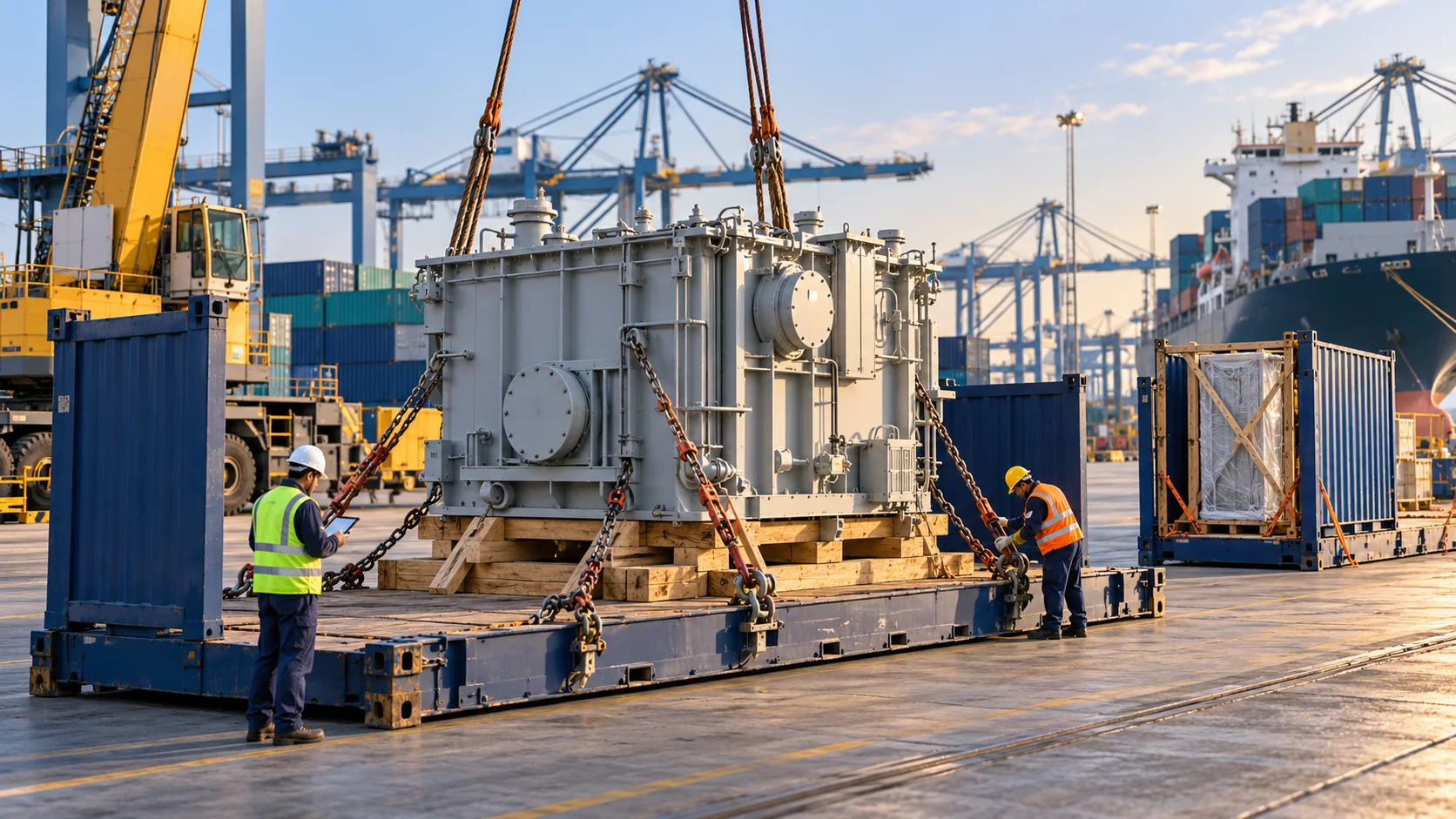
Out-of-gauge cargo is too tall, wide or long for the closed dimensions of a standard container. Transformers, generators, construction equipment, tanks, boats and fabricated skids can still move from Dubai by sea, but the equipment and price depend on the final packed dimensions, weight, lifting points and route. This guide explains how NHK Logistics connects its project cargo service with sea freight to compare flat-rack, open-top and breakbulk arrangements before equipment is booked.
Confirm the transport dimensions, not the drawing dimensions
Measure every piece after export packing, including the skid, timber, protective cover, protruding nozzles and removable accessories. Record length, width, height and gross weight in one unit system and provide a drawing that shows lifting points, centre of gravity and bearing points. A machine's catalogue dimensions are not enough: a few extra centimetres can change the slot allocation, terminal method, road permit and ocean rate.
- Final packed length, width, height and gross weight for each piece
- Technical drawing and clear photographs from every side
- Centre of gravity and certified lifting points where available
- Base or saddle arrangement and permitted support locations
- Whether protruding parts can be removed for transport
- Weather protection, orientation and storage restrictions
- Pickup and delivery addresses with site-access details
Keep these figures identical on the quote request, packing list, lifting plan and carrier submission. The freight quote checklist helps organise the cargo record, while the broader project cargo planning guide covers the route, lift and approval sequence.
Flat-rack: width and height can exceed the frame
A flat-rack has a container base and end frames but no side walls or roof. It suits machinery and skids that can sit on a strong base but exceed standard-container width or height. Cargo is secured to the deck with an engineered combination of timber support, chains, wires, web lashings and blocking. The line must approve the over-width, over-height, weight, support footprint and lashing arrangement because the unit occupies more vessel space than its nominal container slot.
The cargo load should transfer through suitable points into the flat-rack deck; concentrated feet may require designed spreaders or timber. Confirm the flat-rack payload, deck length and lashing-point capacity for the supplied unit rather than relying on a generic container figure. The carrier and competent cargo team review the actual plan before loading.
Open-top: crane loading with standard side walls
An open-top keeps the container floor, end doors and side walls but replaces the solid roof with removable bows and a cover. It can suit tall cargo that fits within the internal width and length but must be lowered by crane. The item still needs clearance from the walls, a suitable base, lashing and protection from weather and water. If the cargo also projects beyond the side walls, a flat-rack is normally the more relevant option.
Breakbulk: individual lifting without a container platform
Breakbulk cargo is lifted and stowed as an individual piece rather than secured to a container base. It may suit units that exceed flat-rack payload or geometry, pieces requiring a specific under-deck position or project lots moving together. Breakbulk availability depends on the vessel, route, port equipment and carrier acceptance, so compare the complete origin and destination handling plan rather than only an ocean rate.
The shipping agency service can connect vessel and terminal communication for a specialised call, and the Dubai port-call guide explains why cargo, lifting and berth information must stay aligned.
Plan the road move before choosing the sea equipment
The cargo must reach the stuffing location or terminal. A route survey can check factory gates, turning radii, overhead structures, road width, bridge restrictions and the receiving area at the port. The land transport team selects a suitable lowbed, extendable or modular trailer and confirms the permits, escort and timing requirements for the final route and load.
For port and local delivery planning around conventional containers and specialised trailers, read the UAE container trucking guide. Never separate the inland plan from the ocean plan: the support and lifting assumptions at pickup, terminal and destination must be compatible.
Lifting, securing and survey records
The lifting plan identifies the crane, rigging, lifting points, sling angles, centre of gravity, exclusion zone and responsible supervisor. The securing plan shows timber supports, blocking and every lashing with its direction and capacity. These documents should be prepared or reviewed by competent parties for the actual cargo, equipment and transport accelerations. Photographs after loading, seal or unit references and a survey report provide the record used for carrier release and destination handling.
If pieces from several suppliers must be checked or staged before loading, use a facility confirmed for the weight, lifting method and floor loading. The warehousing and cross-stuffing service can coordinate suitable receiving, and the buyers' consolidation guide explains how supplier documents and cargo records are brought together.
Carrier approval, cutoffs and customs
Submit the cargo drawing, photographs, packed measurements, weight, equipment request, lifting information and proposed securing plan with the booking request. Out-of-gauge approvals and terminal cutoffs can be earlier than for general containers. The sea freight booking guide explains the documentation, VGM and gate-in sequence, but the carrier will issue shipment-specific conditions for the OOG unit.
Commercial invoices and packing lists must describe the machinery accurately and match the measured package details. Share HS code information, serial numbers, origin and any permits with the customs clearance service before dispatch. Machinery containing fuel, batteries, oil, gas cylinders or chemicals also needs a dangerous-goods review; see the DG shipping guide.
Out-of-gauge booking checklist
- Final packed dimensions and gross weight verified
- Drawing, photos, centre of gravity and lifting points provided
- Flat-rack, open-top or breakbulk compared on the complete scope
- Origin and destination routes and unloading areas reviewed
- Lifting and securing plans prepared for the selected equipment
- Carrier and terminal approval received before dispatch
- Invoice, packing list, customs and permit requirements checked
- Cutoffs, survey, weather protection and destination handling confirmed
Plan an OOG shipment from Dubai
Send NHK Logistics the cargo drawing with packed dimensions, weight, lifting details, pickup location, destination and ready date. The team can compare specialised equipment, connect freight forwarding with road, port and customs planning and build one controlled movement from the UAE pickup point to destination handover.
Need help with a shipment?
Send us the route and cargo details. We reply within 2 business hours.
Request a Quote